
Lung Simulator
Home > Lung Simulator
PRODUCT
Lung Simulator
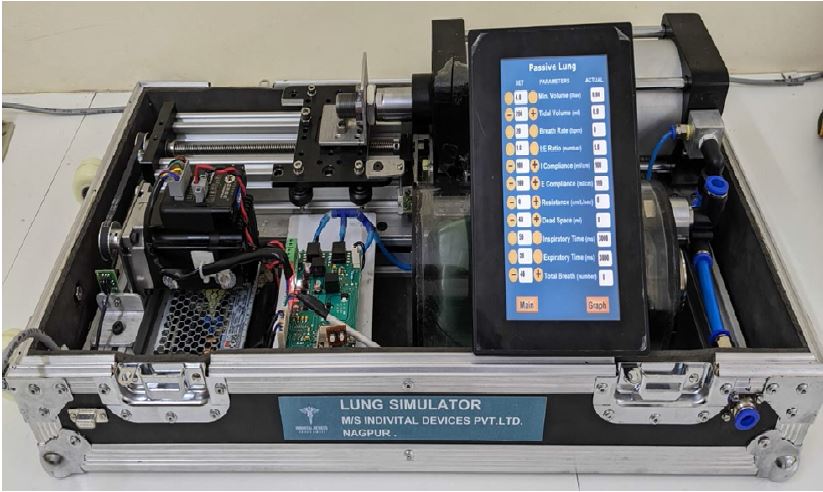
The Versatile Lung Simulator: A Training, Research, and Testing Powerhouse. The lung simulator is a sophisticated medical device designed to mimic the mechanics of human respiration. It serves as a valuable tool for various applications, including:
- Training: Providing realistic scenarios for healthcare professionals to hone their skills in operating ventilators and managing respiratory emergencies in neonates, adults, and other
patient populations.
- Research: Allowing researchers to study the effects of different respiratory interventions, test new ventilation strategies, and develop innovative respiratory devices.
- Testing: Evaluating the performance of ventilators, nebulizers, and other respiratory equipment under controlled conditions.
This comprehensive description delves into the key features and functionalities of a lung simulator, exploring its technical aspects, applications, and benefits.
Core Components:
- Active and Passive Lung Modes: The simulator can operate in two distinct modes:
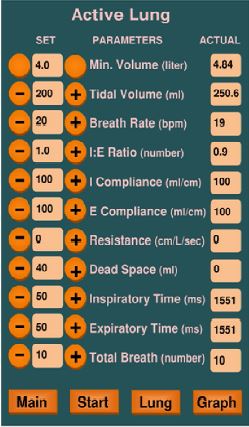
- Active Lung Mode: This mode features an internal pump that actively generates pressure and flow variations, mimicking the behavior of a human lung during spontaneous breathing.
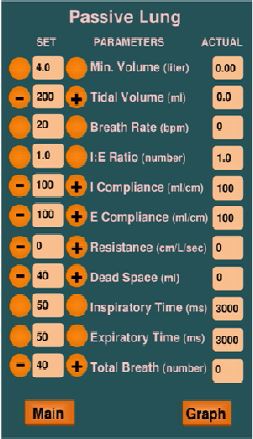
- Passive Lung Mode: This mode functions as a static lung model, allowing for the simulation of various lung conditions with specific compliance and resistance values.
- Pneumatic Cylinder: A pneumatic cylinder, powered by DC Motor, acts as the primary driver for generating pressure changes within the simulated lung.
- Servo Motor Drive: A servo motor, controlled electronically, provides precise control over the movement of the pneumatic cylinder, enabling accurate simulation of breathing patterns.
- Precision Ball Screw: A high-precision ball screw mechanism translates the rotary motion of the servo motor into linear movement of the pneumatic cylinder piston, ensuring smooth and repeatable pressure variations.
- Touch Screen: A user-friendly touch screen interface allows for intuitive control over the simulator’s various settings, including lung parameters, ventilation modes, and data visualization.
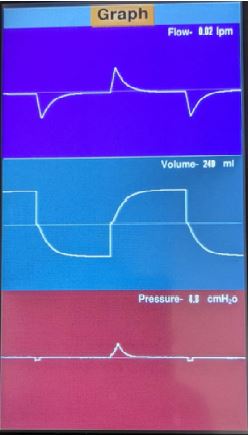
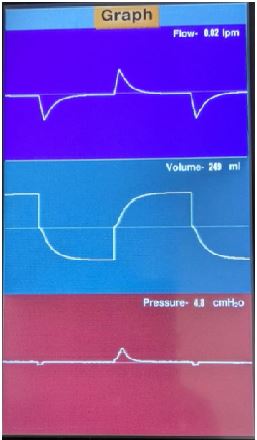
- PC Interface: The simulator can be connected to a personal computer for advanced data analysis, recording of breathing parameters, and visualization of pressure-volume (PV) curves, which offer valuable insights into lung mechanics.
- 32-Bit Microprocessor: A powerful 32-bit microprocessor forms the brain of the simulator, handling complex calculations, real-time control of the pneumatic system, and communication with the user interface and PC.
Lung Abnormality Simulation:
The lung simulator can be programmed to mimic various lung abnormalities, including:
- Restrictive Lung Disease: This condition simulates a decrease in lung compliance, making it more difficult to inflate and deflate the lungs.
- Obstructive Lung Disease: This condition simulates an increase in airway resistance, making it harder for air to flow in and out of the lungs.
- Leaks: Leaks can be programmed to represent various scenarios, such as a pneumothorax (collapsed lung) or a leak in the ventilator circuit.
Integration and Customization:
- Test Lung or Ventilator Connection: The lung simulator can be seamlessly connected to either a test lung model or a real ventilator, allowing for comprehensive testing and training scenarios.
- Adjustable Parameters: Users can customize various parameters within the simulator to create specific scenarios, including:
- Compliance: This setting adjusts the ease with which the simulated lung expands and contracts, allowing for the replication of healthy or diseased lung conditions.
- Air Resistance: This setting influences the resistance to airflow within the simulated airways, mimicking healthy or obstructed airways.
- Breath Rate: This setting controls the number of breaths taken per minute.
- Inspiratory/Expiratory (I/E) Ratio: This setting determines the duration of inhalation compared to exhalation.
- Tidal Volume: This setting defines the amount of air inhaled and exhaled with each breath.
Applications and Benefits:
The lung simulator offers a multitude of benefits across various domains:
- Training: Healthcare professionals can practice ventilator management, troubleshoot ventilation problems, and gain confidence in handling respiratory emergencies using a safe and realistic platform. This translates to improved patient care and better clinical outcomes.
- Research: Researchers can conduct controlled experiments to evaluate the effectiveness of different ventilation strategies, test new respiratory devices, and study the impact of various interventions on lung mechanics. This fosters advancements in respiratory medicine.
- Testing: Medical device manufacturers can rigorously test the performance and safety of ventilators and other respiratory equipment under simulated conditions. This assures quality and reliability of these crucial medical devices.
Conclusion:
The lung simulator, with its diverse functionalities and customizable settings, serves as an invaluable asset for training, research, and testing in the field of respiratory medicine. By mimicking the complexities of human respiration and replicating a wide range of lung conditions,
it empowers healthcare professionals to enhance their skills, researchers to accelerate scientific discovery, and manufacturers to ensure the quality and efficacy of respiratory devices. This ultimately translates to better patient care, improved respiratory health outcomes, and
advancements in the field of pulmonary medicine.